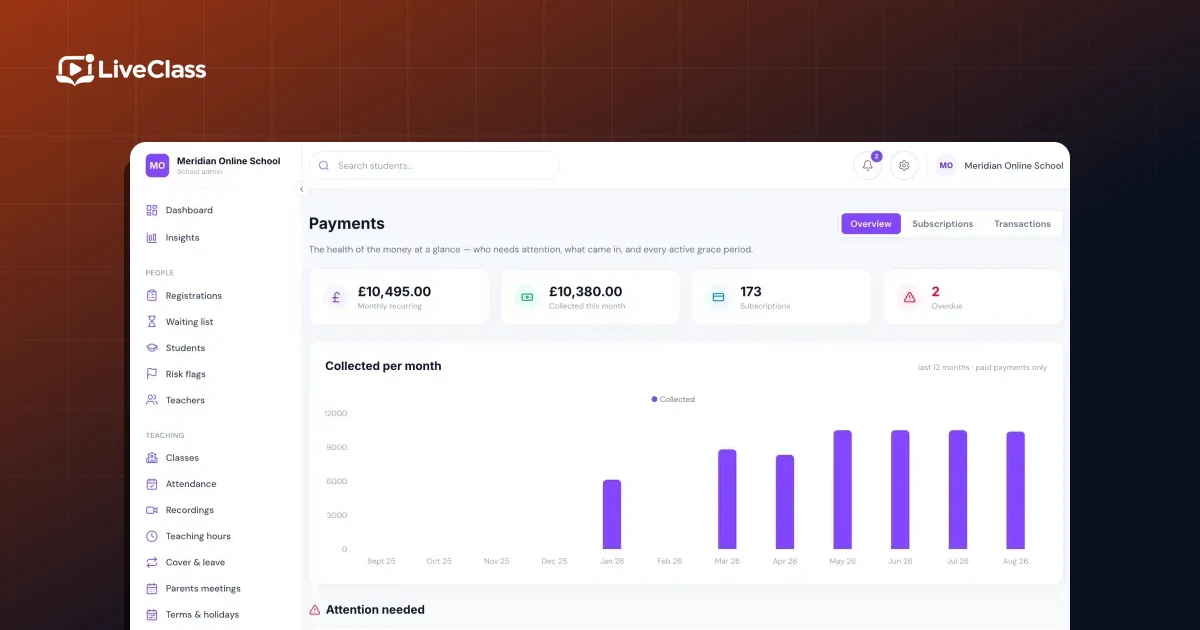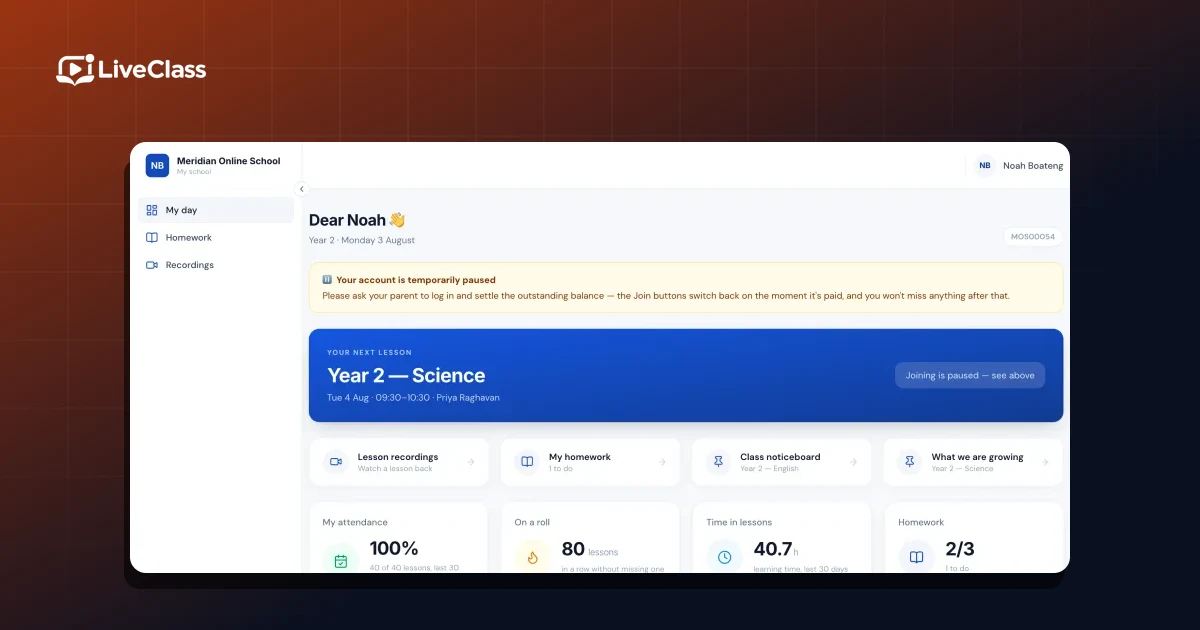

This is the decision online schools most want to avoid making, and avoiding it is the expensive option — because the school ends up with the harshness of a strict policy and the collection rate of a lenient one.
There is no universally right answer. There is a right answer for your school, and the wrong answer is not choosing.
The case for linking them
It is enforced by a system, not by a person. In a physical school, fee conversations happen because the parent is standing in front of someone. Online, that conversation has to be initiated by a member of staff who finds it unpleasant — so it gets deferred, and then it does not happen. A rule the system applies removes that entirely.
It is applied identically to everyone. Discretionary enforcement is unfair in practice even when it is well-intentioned, because the families who get chased hardest are the ones the office happens to think of. A rule is the fairest version of an uncomfortable thing.
It is honest about what the school is. A fee-paying school that never enforces its fees is, in effect, charging the families who pay for the families who do not.
The case against
Some schools exist precisely to not do this. For a community, faith or supplementary school, excluding a child over money can be contrary to the entire purpose of the institution. That is a legitimate position and it does not need defending to a software vendor.
Children are not the debtors. Whatever the mechanism, the person who loses the lesson is a child who has no influence over whether the invoice was paid. Any school linking the two is choosing to accept that, and should do so deliberately rather than by default.
It can cost more than it collects. A family two weeks late who would have paid on week three, cut off in week two, sometimes just leaves. If your typical late payer is disorganised rather than unwilling, the ladder collects nearly as well without the cliff.
The option that does not work
A written policy saying access depends on payment, and a practice of never applying it.
Parents learn the real rule within a term. You then have a document that reads as harsh to every new family, no collection benefit, and a staff member who has to explain why the thing that did not happen to one family is happening to another. Either enforce it or do not claim it.
If you do link them, four rules
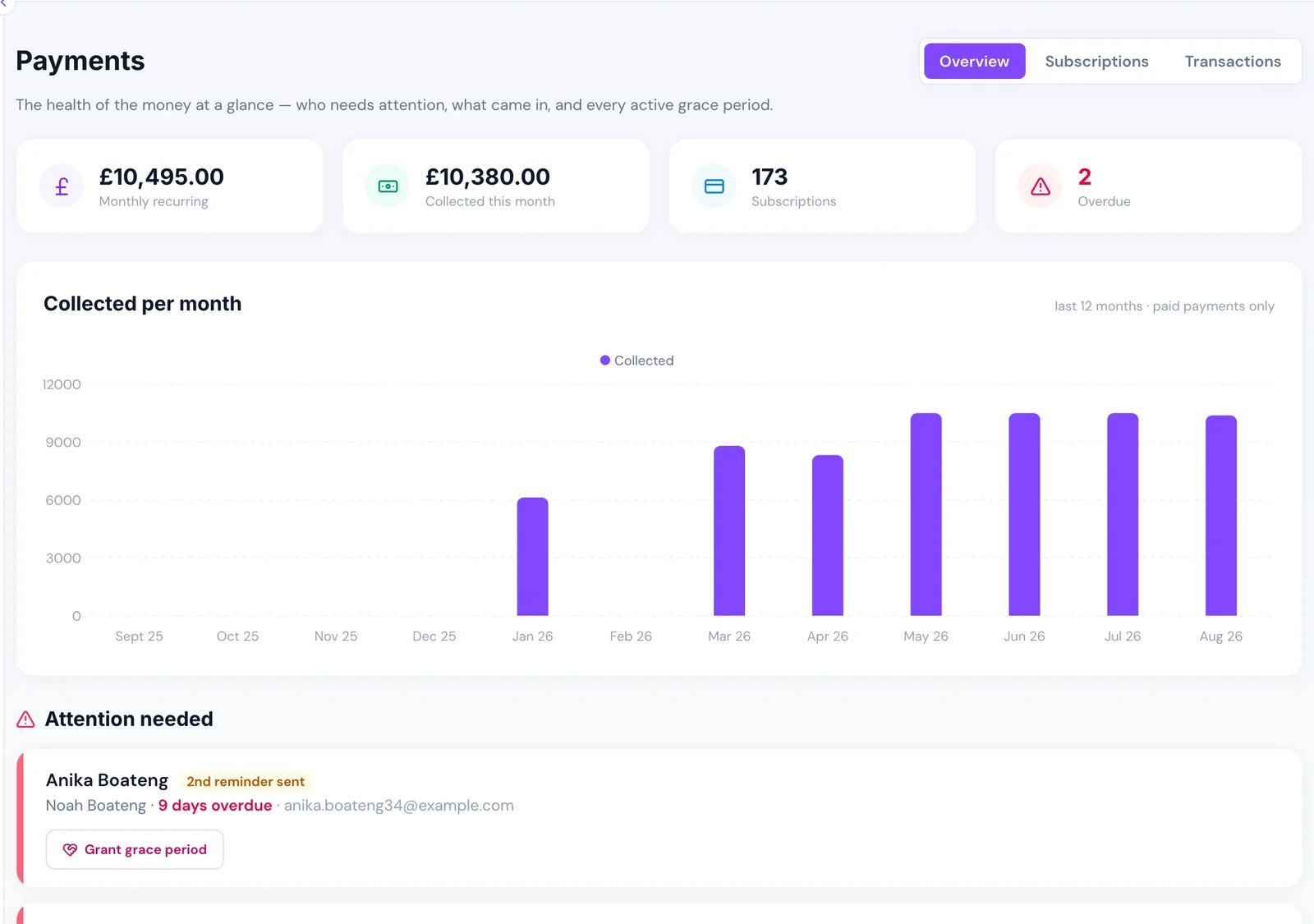
1. Warn early, more than once, and before the cliff. Nobody should meet the rule for the first time at the moment it applies to them. A reminder before the due date collects a surprising share of what would otherwise become arrears, because most late payment is a forgotten card rather than a decision.
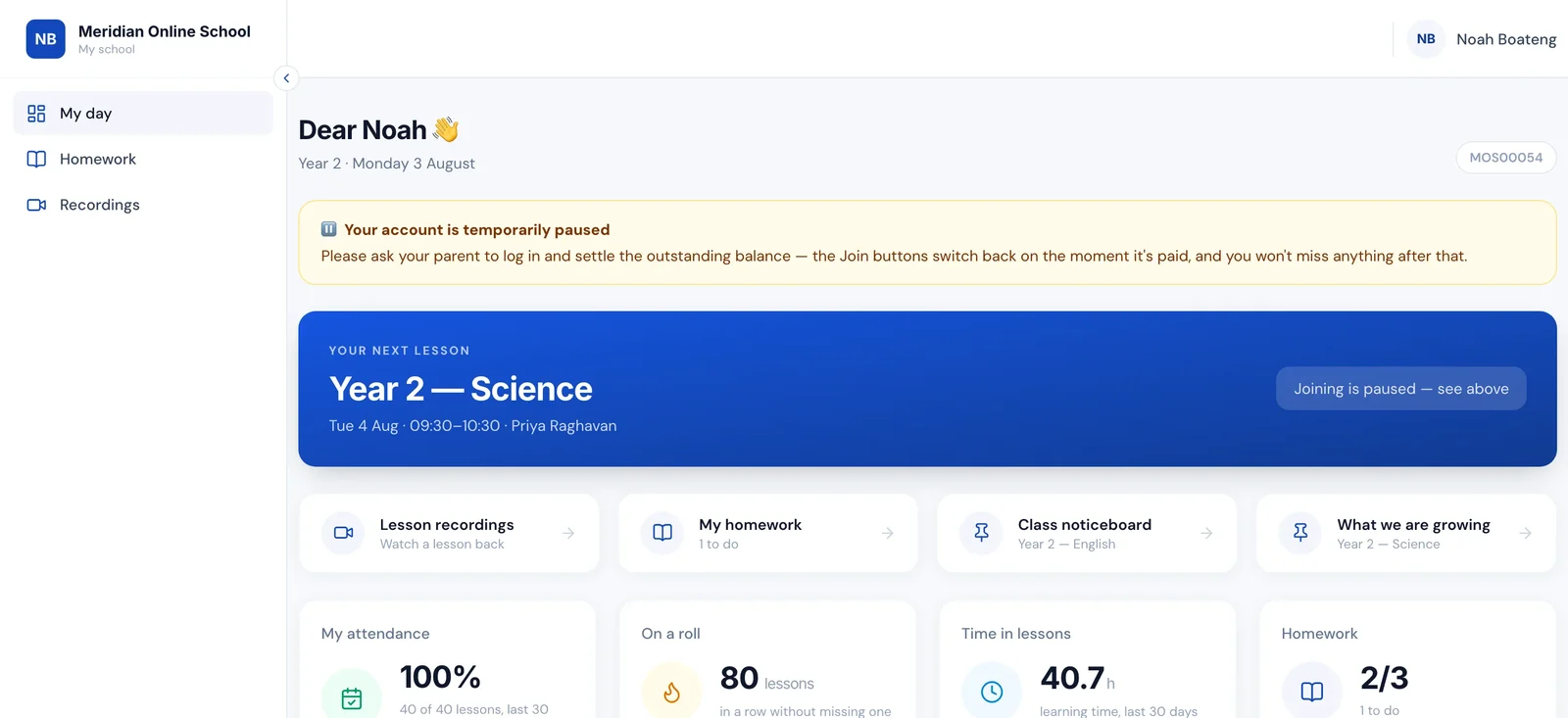
2. The pupil must never be told why. This is the one to get right. The child uses the same system. Any message they can see should say access is paused and who to speak to — never an amount, never a suggestion that their parents have failed to do something.
3. Restore instantly. A child who misses a lesson after the money arrived is a complaint the school has earned, and it undoes months of goodwill in one morning.
4. Keep an override, and log it. There will be a family where the right answer is to keep teaching the child. Make that a decision someone records, with a date to revisit, rather than a favour nobody wrote down.
If you do not link them
You need the chasing to actually happen, which means it has to be automatic — a fixed ladder that runs whether or not anyone feels up to it, and that ends rather than repeating forever.
You also need a point at which a case stops being a reminder and becomes a conversation. Schools without payment-linked access and without that threshold accumulate arrears quietly for a year and then discover the number.
The question that settles it
Ask what happens in your school when a family is three months behind and not responding.
If the honest answer is "we would keep teaching the child and eat it", link nothing — build the ladder, set a threshold for a human conversation, and be a school that does that on purpose.
If the honest answer is "we could not sustain that", link access, and build the warnings so well that almost nobody reaches the cliff.
Both are respectable. Drifting between them is what costs money and goodwill at the same time. The rest of the fee machinery — cycles, rails, leavers — is in how online schools collect tuition fees.