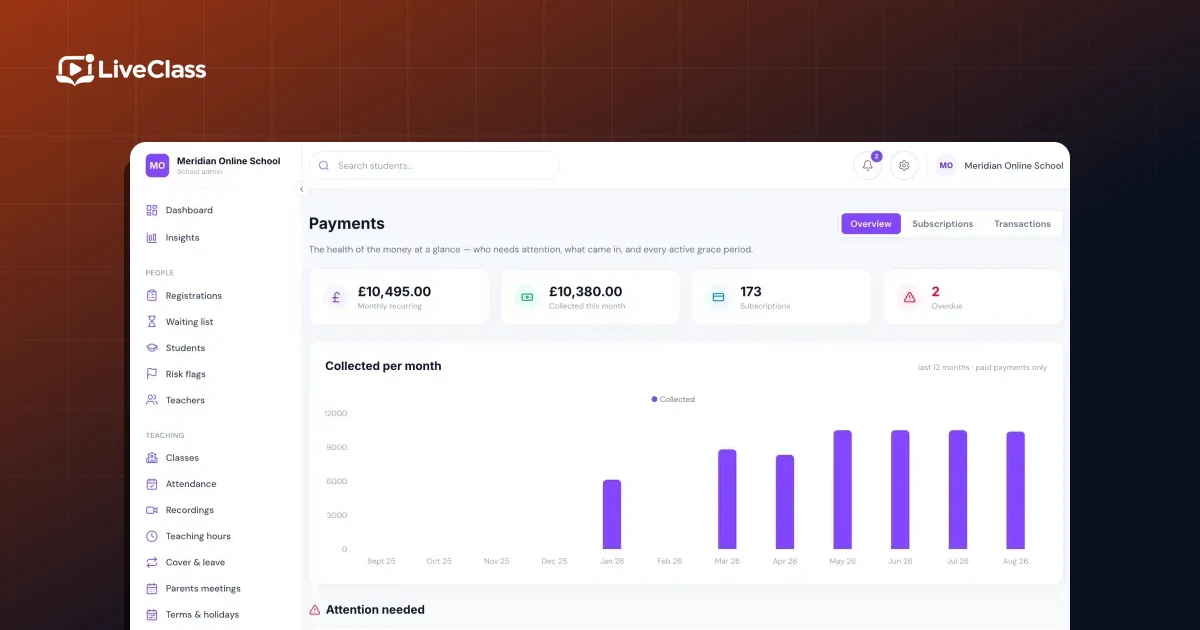
Most unpaid school fees are not refusals. They are a card that expired, a standing order somebody cancelled when they changed bank, an invoice that arrived during half term, or a parent who fully intends to pay on Friday and has intended that for three weeks.
That single observation should shape the whole process, because a school that chases as though every late payer is a debtor gets worse results than a school that chases as though most of them simply forgot. The forgetful majority pay on the first reminder. The genuinely struggling minority need a conversation, not a fifth email.
Chase on a ladder, not on a feeling
The most common approach in small schools is: somebody notices, feels uncomfortable, puts it off, eventually sends an awkwardly apologetic email, and then either escalates sharply or lets it drop.
This is worse for everybody than a fixed sequence. It is unpredictable, so parents cannot learn the rules. It is inconsistent between families, which is unfair and occasionally discriminatory. And because it depends on a person feeling up to it, it does not happen reliably.
A ladder that works:
| When | What it is | Tone |
|---|---|---|
| A few days before due | Advance notice — "your next payment is due on the 1st" | Informational |
| Day 0 | Payment due today, here is how to pay | Neutral |
| Day 3 | Still outstanding, here is the link again | Neutral |
| Day 7 | Outstanding a week, please get in touch if there is a problem | Warm, opens a door |
| Day 14 | Final automated reminder, this now goes to the office | Clear, not threatening |
| After day 14 | A human being, once | Conversation |
Two properties make this work, and both are easy to lose.
It is obviously automatic. Nobody feels singled out by a system that treats everyone identically. A great deal of the awkwardness in fee chasing comes from parents suspecting they have been personally judged.
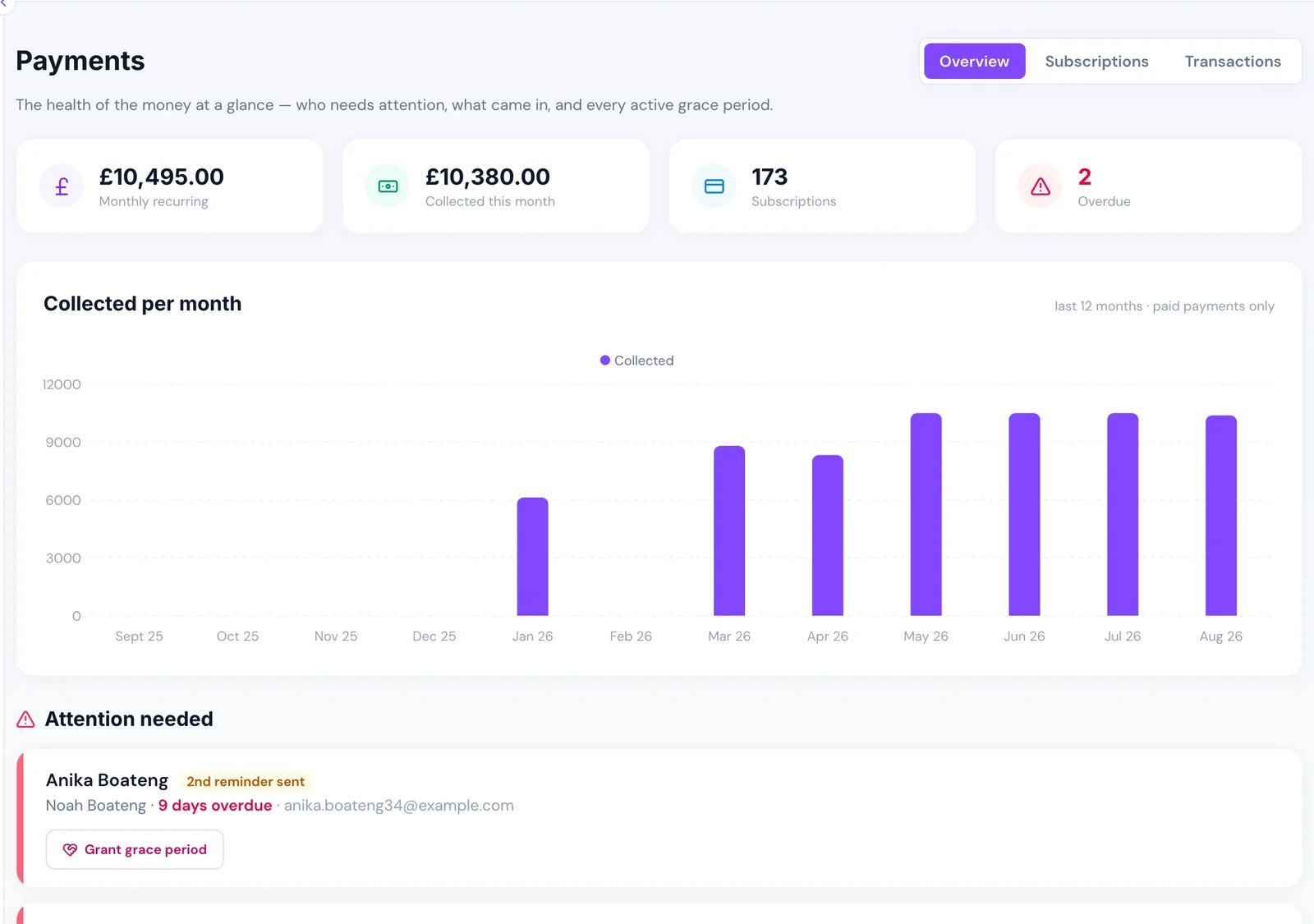
It ends. This is the one schools get wrong most often. A reminder that repeats weekly forever trains every recipient to ignore it, including the ones who would have paid. After the ladder finishes, stop sending automated messages and hand the case to a person.
The pre-due reminder earns its keep
If you add one thing to your current process, add the reminder before the due date.
It costs nothing, it is completely uncontroversial — nobody has ever been offended by being told a payment is coming up — and it converts a meaningful share of what would otherwise become arrears, because it catches the expired card before the payment fails rather than after.
One implementation warning: key it to the date the pupil's fees are paid up to, not to "any pupil with an unpaid invoice", or it fires repeatedly at the same family and becomes noise.
What to actually write
Short. Specific. One action.
The early messages need three facts and nothing else: the amount, the child's name, and how to pay. Not a paragraph about the school's financial position, not an apology for sending it, not a warning about consequences that will not arrive for another fortnight.
The day 7 message is the one that should explicitly open a door — a sentence saying that if there is a difficulty, the school would rather know than not. That sentence is where payment plans and bursary conversations come from, and schools that omit it find out about hardship only when a family disappears.
Things to keep out of automated reminders:
- Anything the child could read as blame. Children use the same portal. A message implying their parents are in trouble should never reach them.
- Threats you will not carry out. If you are not prepared to suspend access, do not mention suspending access.
- Legal language, at any stage before you have genuinely taken legal advice.
Access suspension, if you use it
Some schools link lesson access to payment; some do not, and both are defensible — the choice is covered in how online schools collect tuition fees.
If you do link them, three rules make it survivable:
- Warn early and more than once. Nobody should discover the rule at the moment it is applied to them.
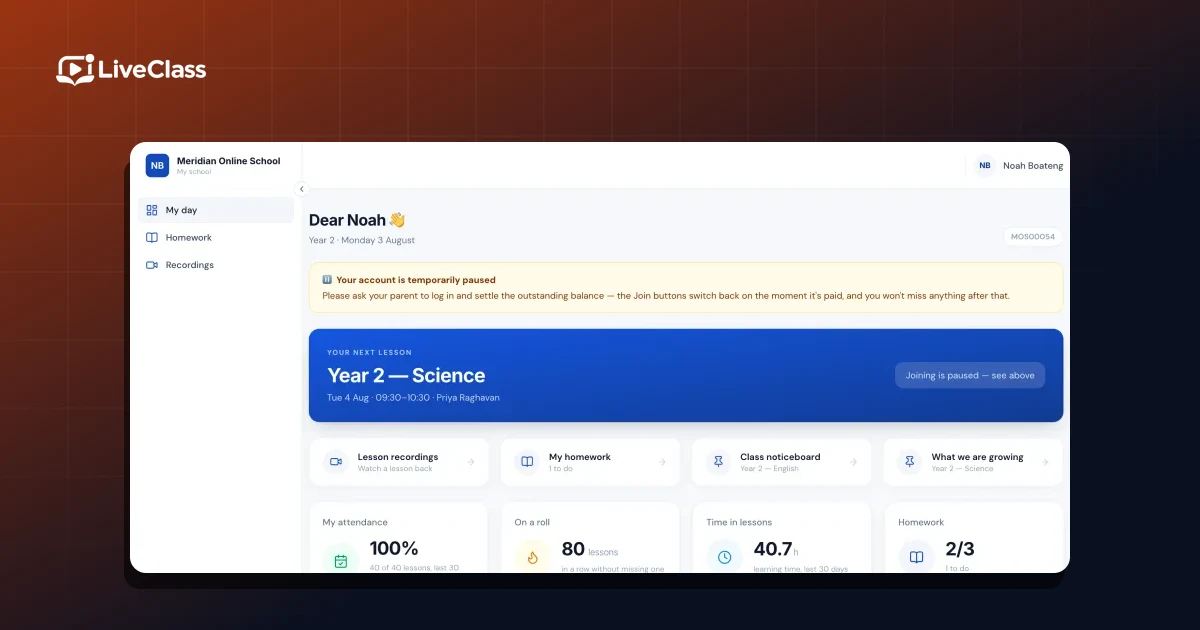
- Suspend the family's access, never the child's dignity. No message the pupil can see should explain why.
When it is genuinely hardship
Some families cannot pay. In a small online school you will usually know which ones before the ladder tells you.
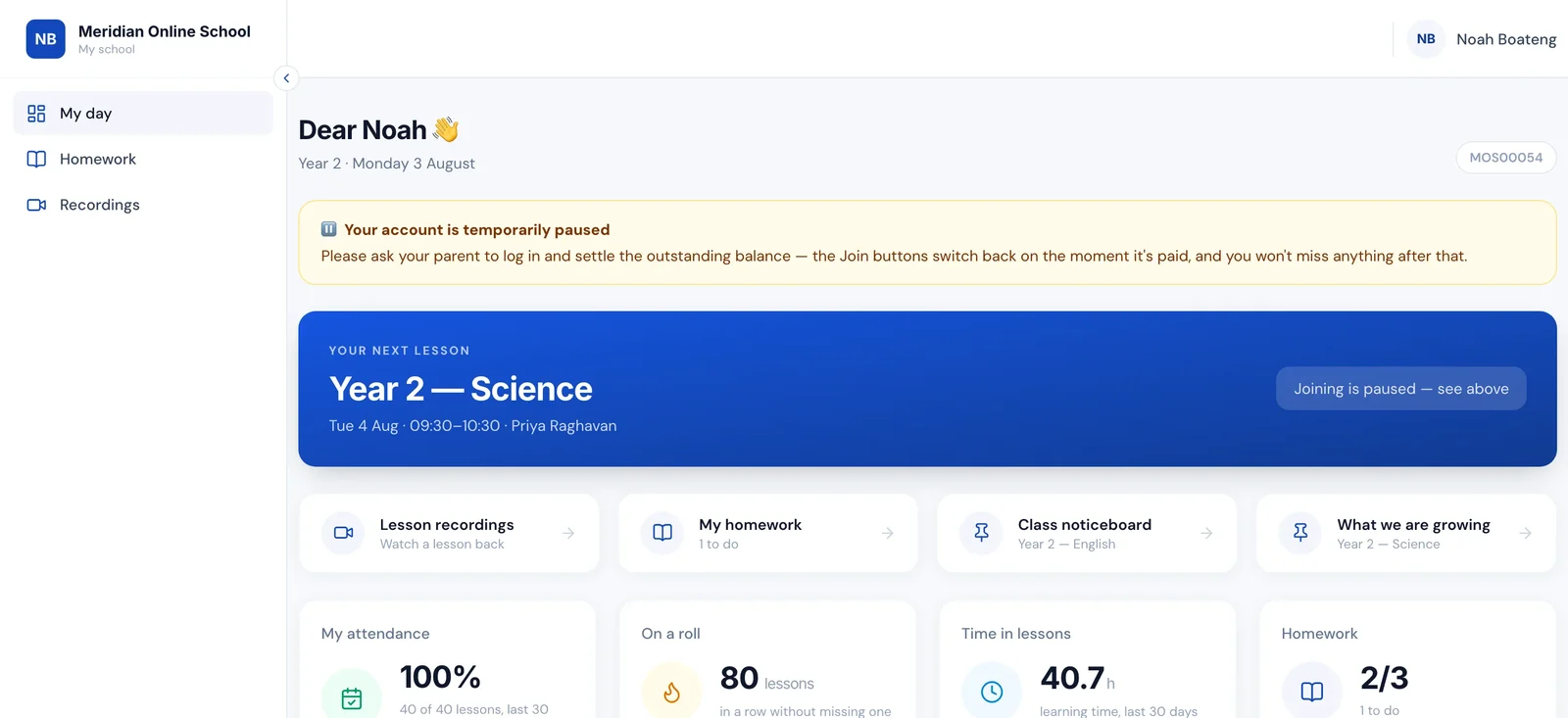
Have a decided answer in advance — a hardship rate, a payment plan, a limited bursary, or a term's grace — because the alternative is improvising under pressure, which produces different answers for different families and no record of why. Whatever you decide, write down what was agreed and when it is reviewed. A payment plan nobody recorded is an argument in three months.
Leavers
When a family leaves owing money, the temptation is to remove them from the system to tidy the list. Do not.
Deregister rather than delete. Deleting destroys the attendance record, the reports and the payment history — precisely the evidence you would need in any dispute about what was owed and what was delivered. Cancel the billing, mark them as left, keep the record for as long as your retention policy says.
The uncomfortable summary
Fee chasing in a small school fails for a human reason, not a technical one: it is unpleasant, so it gets deferred, so it happens late and inconsistently, so it collects less and upsets more people than it should.
Automating the first four steps removes the unpleasantness from the ninety per cent of cases that are pure forgetfulness, and leaves the school's actual judgement for the handful of cases that genuinely need it. That is the whole benefit, and it is a bigger one than it sounds.