A teacher emails at 8:20 to say they are ill. The lesson is at 9:00. In a building, the head walks down the corridor and finds someone. Online, there is no corridor, and there is no adult who happens to be standing near the room when it goes wrong.
This is the most visible failure an online school can have. A covered lesson in a building is still a lesson — a supervised room, some work set. An uncovered online lesson is twenty families sitting in an empty meeting, watching nothing happen, forming an opinion.
The question that has to be answerable in one minute
Not "who teaches Year 9 maths" — you know that, they are ill. The question is:
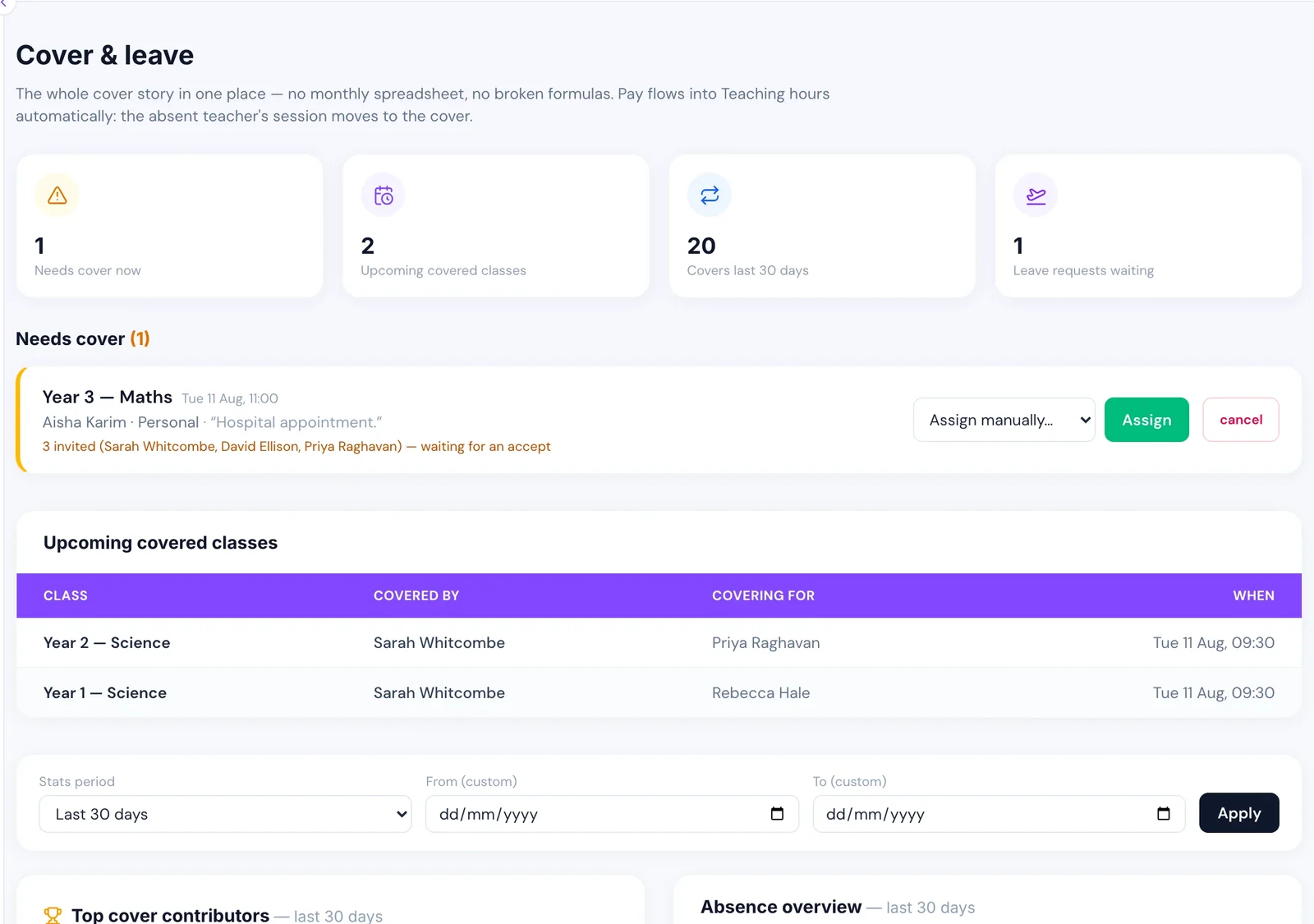
Who is free at 9:00 today, and which of them can teach this?
Most schools discover they cannot answer that quickly, because their timetable is organised by class rather than by time. Finding who is free means mentally transposing the whole grid under pressure, so the real fallback becomes a message to a WhatsApp group and hope.
That works until the morning it does not, and the morning it does not is not predictable.
Two things make it answerable:
A timetable you can query by time. Give me a moment and tell me who is not teaching.
A timetable that exists in one place at all — which is part of the wider platform setup in running live lessons on Zoom for a whole school.
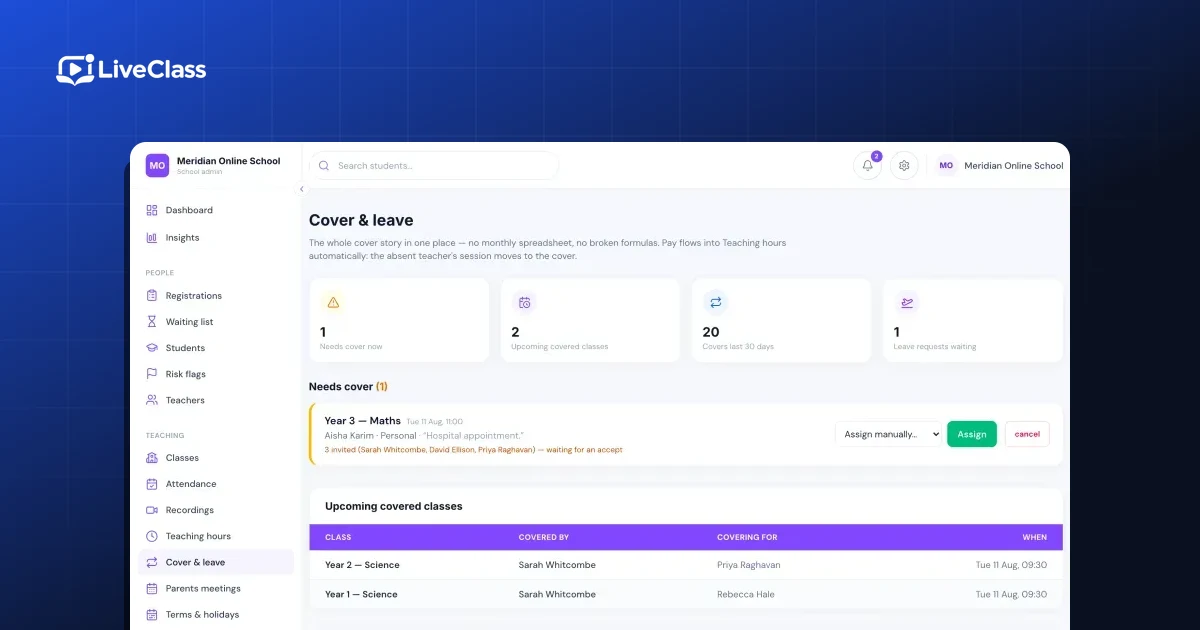
Something that knows who can teach what. Ranking the free teachers by subject is what turns a list of names into a decision. It should rank rather than filter — at 8:40 a competent adult who has taught the year group is a better outcome than an empty room, even if they are not a specialist.
Decide in advance what happens when nobody is free
Sometimes the answer is genuinely nobody. Decide now, not at 8:45, which of these your school does:
- Cancel and notify, with a clear message to families and a stated plan to make the lesson up
- Run it as supervised independent work, with a set task and an adult present
- Merge with a parallel class for that lesson only
All three are acceptable. Improvising at 8:45 is not, because the person improvising will pick whichever needs the fewest decisions, and that is usually silence.
Whichever you choose, the families must be told before the lesson time, not after. A parent whose child sat in an empty meeting for ten minutes is much angrier than one who got a message at 8:50 saying today's lesson is cancelled and will be made up on Thursday.
Build the bench before you need it
The scramble is worse in an online school for a reason that is easy to miss: there is no staff room. In a building, teachers know informally who is good with Year 9, who has taught the syllabus before, and who owes whom a favour. None of that ambient knowledge exists when everyone works from home, so it has to be written down.
Two things are worth having on file before the first illness of the year:
Who can teach what, beyond their timetable. Most teachers can competently cover more than they are scheduled for — a maths teacher who did physics, someone who taught a different year group at their last school. Nobody volunteers this information unasked, so ask at induction.
Who is willing to be called at short notice, and on what terms. Some staff genuinely cannot; part-time teachers have other jobs in the gaps you can see in the timetable. Treating a free slot as availability is how you burn goodwill with the people you most need.
Cover is a fairness problem too
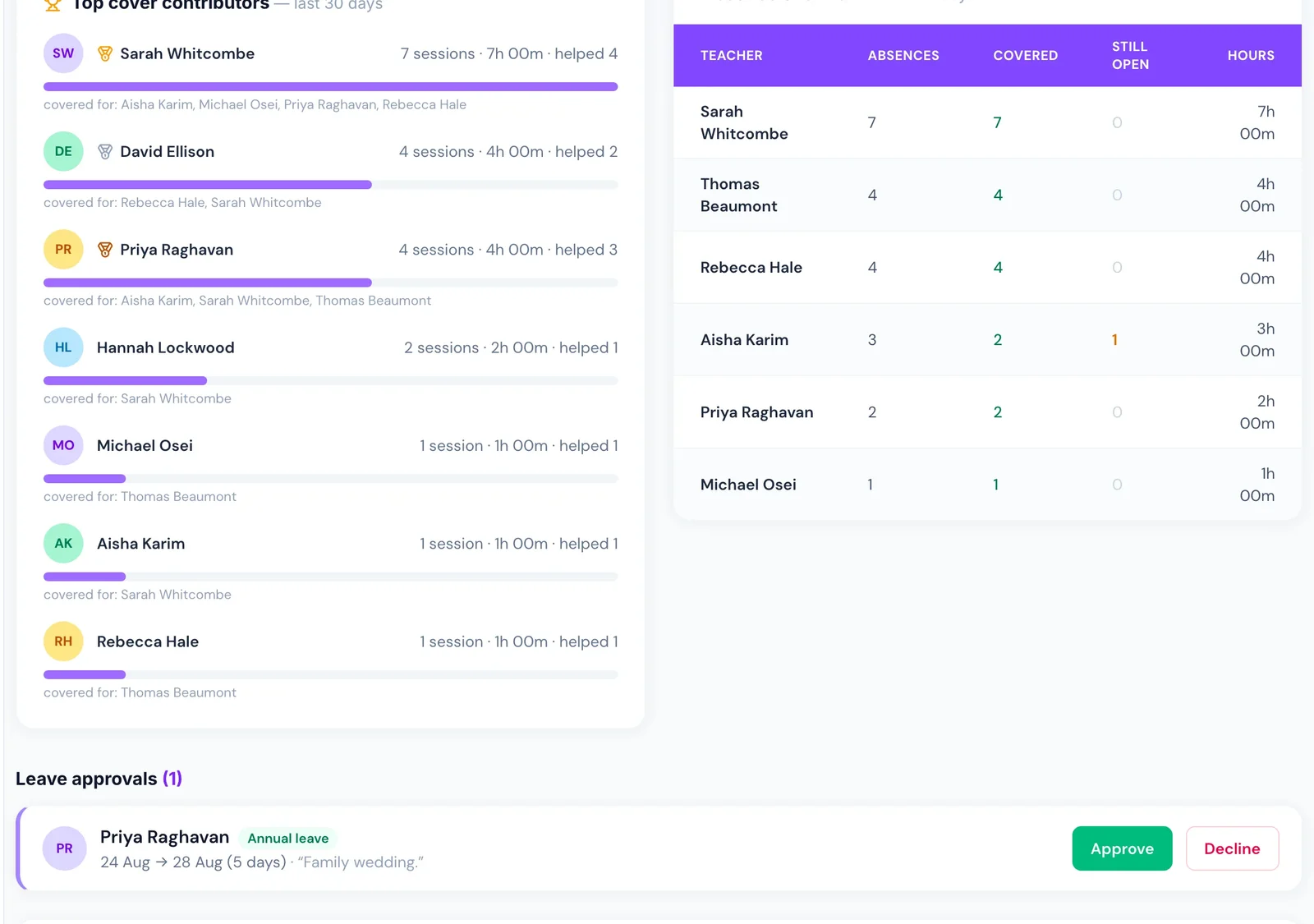
If the same three obliging teachers cover everything, you will lose those three teachers. In a building this is visible; online, nobody sees it happening.
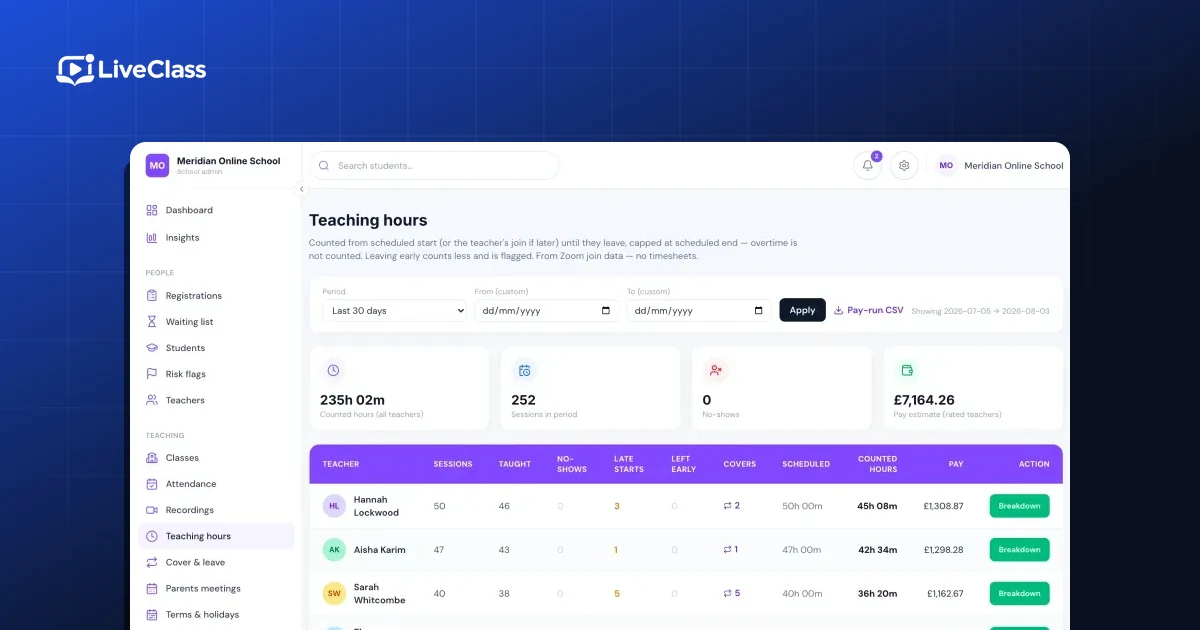
Keeping a simple count of who has covered what, and making it visible, does two things: it spreads the load, and it lets you thank and pay people accurately. Schools that track it discover the distribution is far more lopsided than anyone believed.
The version that has never failed
- the timetable can be asked "who is free at 09:00"
- free teachers are ranked by whether they can teach the subject
- the fallback when nobody is free is written down and agreed
- families are notified before the lesson time, always
- cover is counted, and the count is visible
None of that requires anyone to be clever at 8:20 in the morning, which is the point — that is not a moment for judgement, it is a moment for a procedure.
Cover is one of six processes that have to work every week in a school with no building; the rest are in the operations guide.