An online school's families are spread across countries in a way a local school's are not. A diaspora community school, a language academy, a faith school teaching children of migrants — these are common shapes, and in all of them a meaningful share of parents read the school's language slowly, or not at all.
Most schools handle this by relying on whoever in the family speaks English best. Very often that is the child.
The problem with the child translating
It happens constantly and it is worth naming.
A pupil translating a fee reminder now knows exactly how much their family owes and how late it is. A pupil translating a message about their own behaviour is being asked to deliver a criticism of themselves, accurately, to their own parent. A pupil translating a safeguarding conversation is the reason that conversation cannot be relied upon at all.
Beyond fairness, it breaks the school's actual purpose: the parent is no longer receiving information from the school, they are receiving their child's summary of it.
What has to be translated, in priority order
You do not need everything in every language on day one. In order of consequence:
1. Anything about money. Fee notices, reminders, changes to charges. A parent who does not understand a payment message does not pay, and then becomes an arrears case created entirely by the school.
2. Anything requiring consent or a decision. Trips, data permissions, medical, opting in or out of anything. Consent obtained from someone who did not understand the question is not consent.
3. Anything about the child's welfare. Attendance concerns, behaviour, safeguarding.
4. Reports and feedback. The reason a parent is paying — see reporting to parents.
5. General announcements. Term dates, timetable changes. Useful, lowest stakes.
Where machine translation is fine, and where it is not
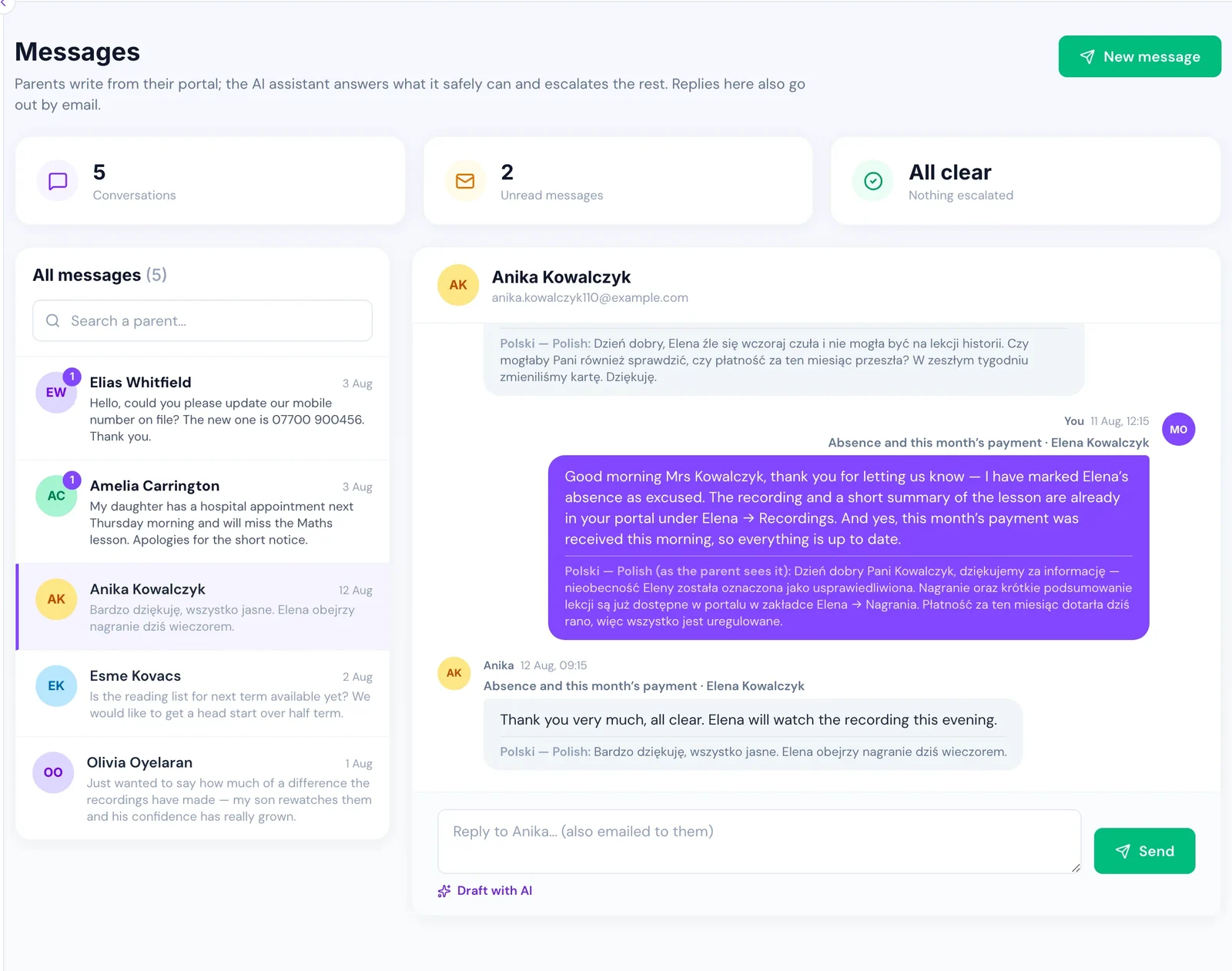
Machine translation is now good enough for the routine majority. It is a mistake to refuse it on principle: a fee reminder that is 95% right in a parent's own language is enormously better than a perfect one they cannot read.
Use it freely for: term dates, timetable changes, fee reminders, homework notices, general announcements.
Do not rely on it alone for:
- Safeguarding and child-protection conversations. The stakes are absolute and the vocabulary is exactly where machine translation is least reliable.
- Anything with legal effect — contracts, exclusions, formal complaints, data-processing consents.
- Medical detail, where an error is a physical risk.
For those, use a human. It will be a handful of documents a year, and it is the difference between a policy and a liability.
Two safeguards worth building in whatever you use: keep the original alongside the translation, so a bilingual family member or a member of staff can check it; and mark it as machine-translated, so nobody mistakes it for the school's authored words.
Let parents reply in their own language too
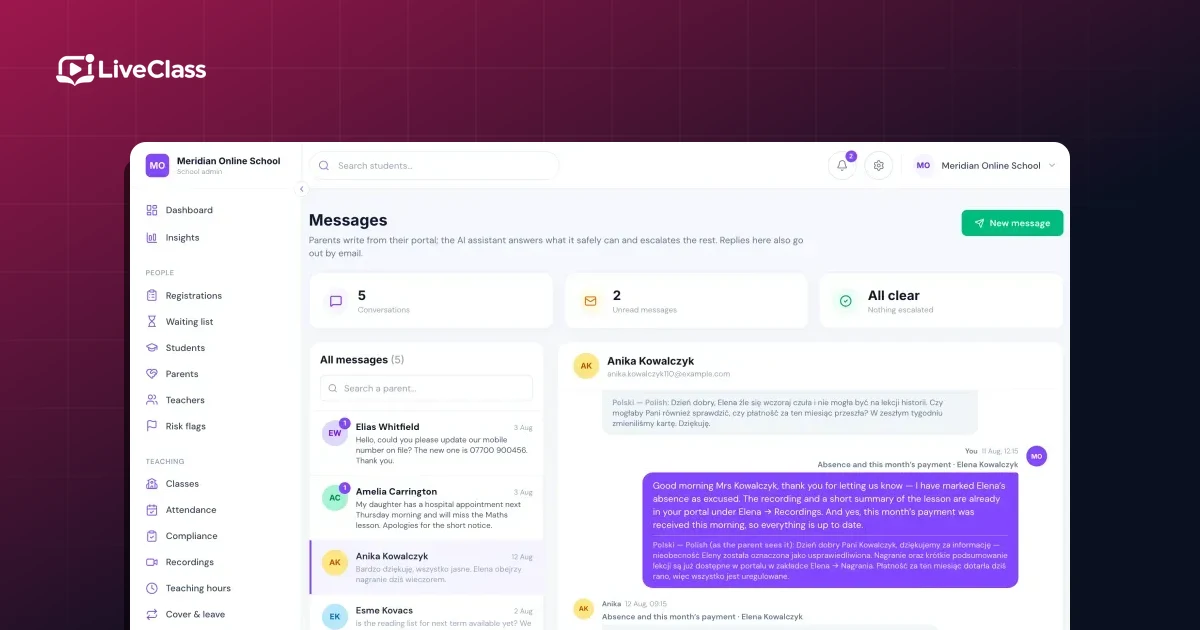
Translation that runs one way is a broadcast, not a relationship. A parent who receives messages in Uzbek and must reply in English is still excluded from the conversation — they simply receive more of it.
Two-way translation changes the character of the thing. The parent writes in their language, the office reads it in theirs, and neither side has to perform in a second language to be taken seriously. It is also where you discover the concerns that never reached you before.
Names, dates and the small dignities
Translation is the visible part; the unglamorous parts matter as much.
Spell names correctly, including diacritics. A school that cannot render a child's name properly has told the family something about itself before it says anything else.
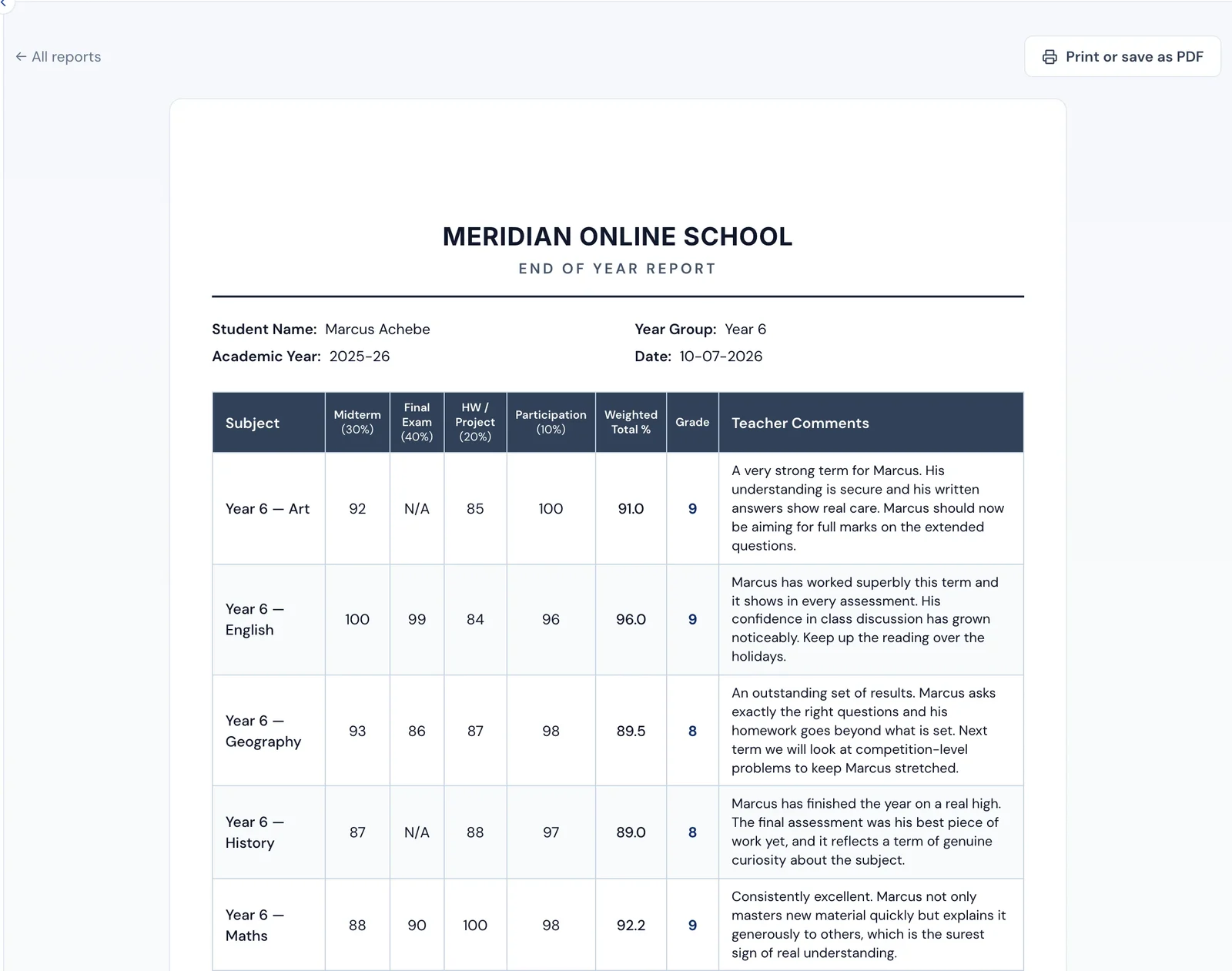
Write dates unambiguously. 03/04/2026 is two different days depending on where the reader is.
Do not require a Latin-alphabet name in a field that will be printed on a report card.
Check what a parent sees, in their language, on a phone. Translated text is routinely longer than English and will break a layout that was only ever checked in one language.
The test
Pick a family whose parents read least English and ask, honestly: over the past term, did they receive the same information as everyone else?
If the answer depends on the child, the school has not been communicating with the parents at all.