Parents of online pupils ask a question that parents at a physical school mostly do not: is this actually working?
It is a fair question and it comes from a real gap. They cannot see the classroom, they do not bump into a teacher at pickup, and in most cases they are paying directly rather than through taxes. The reassurance a building supplies for free has to be manufactured deliberately.
Reporting is how. It is also the thing most likely to be left until the end of the first term and then done in a panic.
The three layers, and the different jobs they do
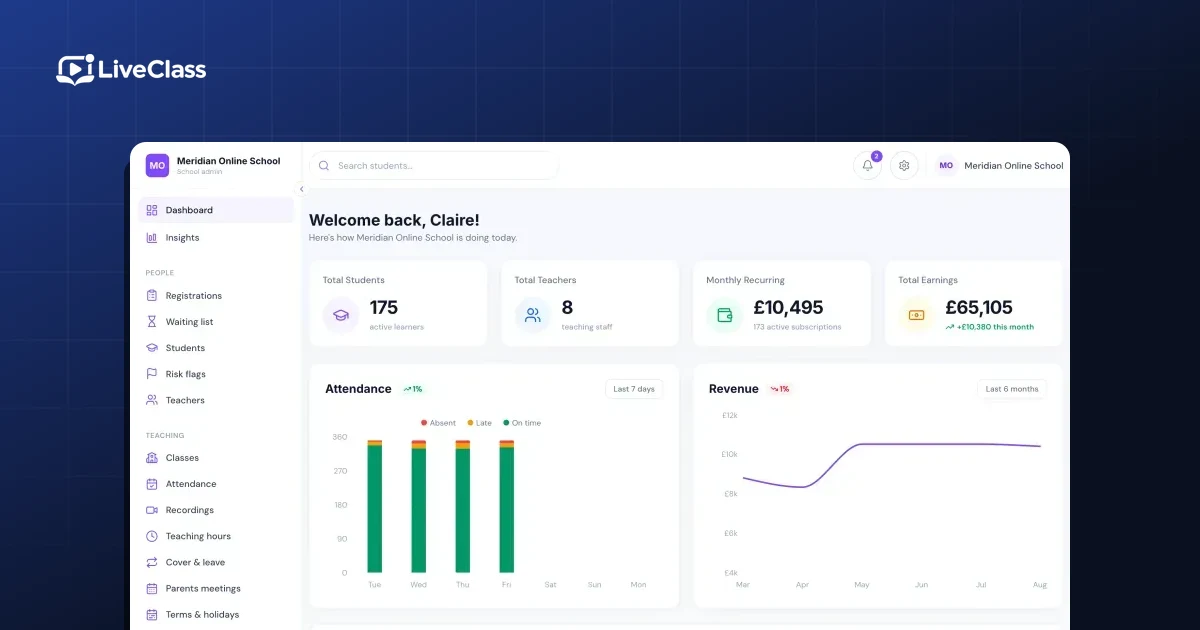
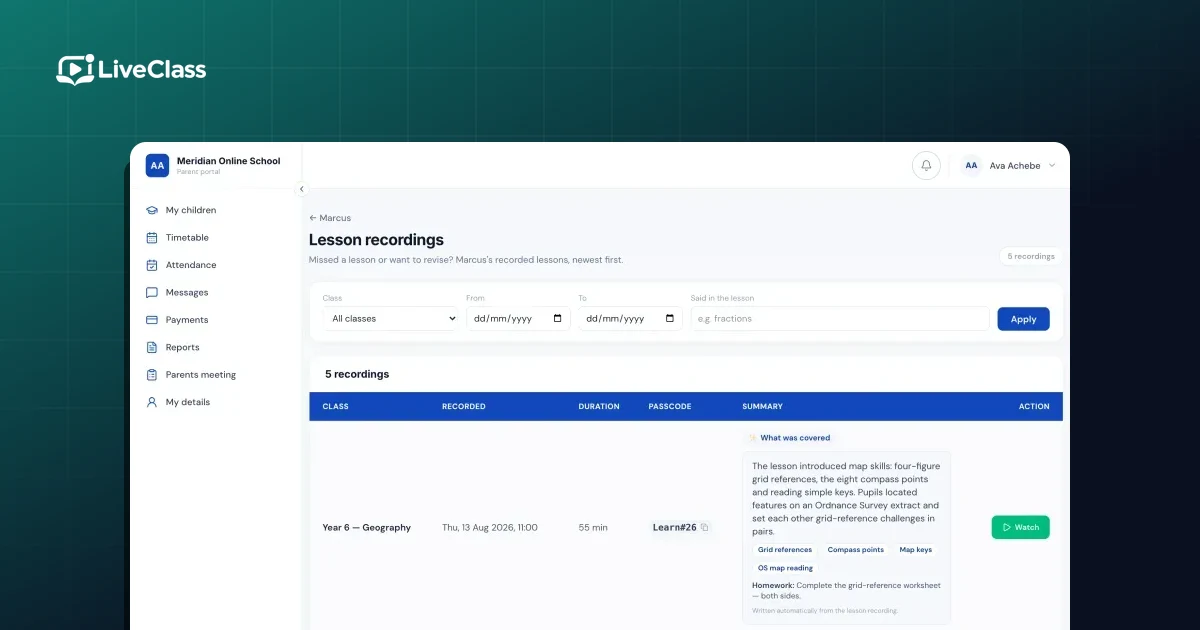
Continuous — attendance and homework, visible to a parent whenever they want it, without asking. This is the layer that answers "is my child turning up and doing the work", which is most of the anxiety, most of the time. It costs nothing per parent once it exists, and it removes a surprising volume of email.
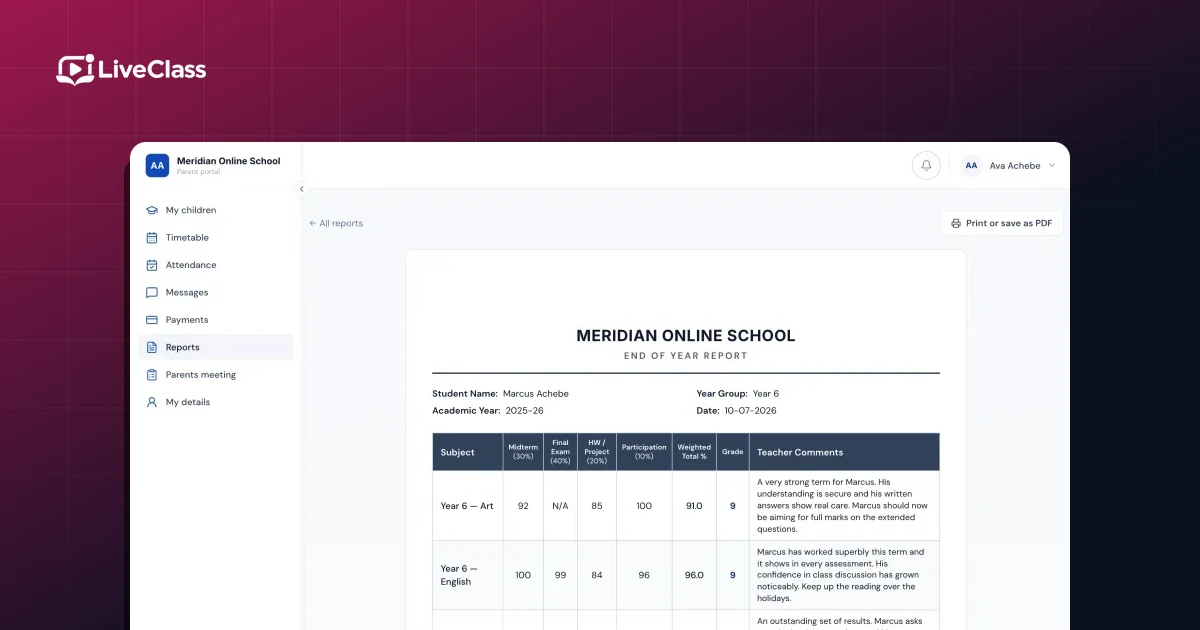
Periodic — a termly or half-termly report card with marks and a comment. This answers "are they learning", which the continuous layer cannot.
Human — parents' evening, and a call when something matters. This answers "what do you actually think of my child", and nothing written substitutes for it.
Schools that do only the middle layer feel remote. Schools that do only the first feel automated. The three together are what a building used to do without anyone planning it.
Settle the arithmetic before you write a single report
This is the part that causes arguments, and it is much easier to decide now than in the week reports go out.
What happens when a component has no mark? A pupil who joined in November has no midterm. A class that lost a lesson to a cancellation has no project mark.
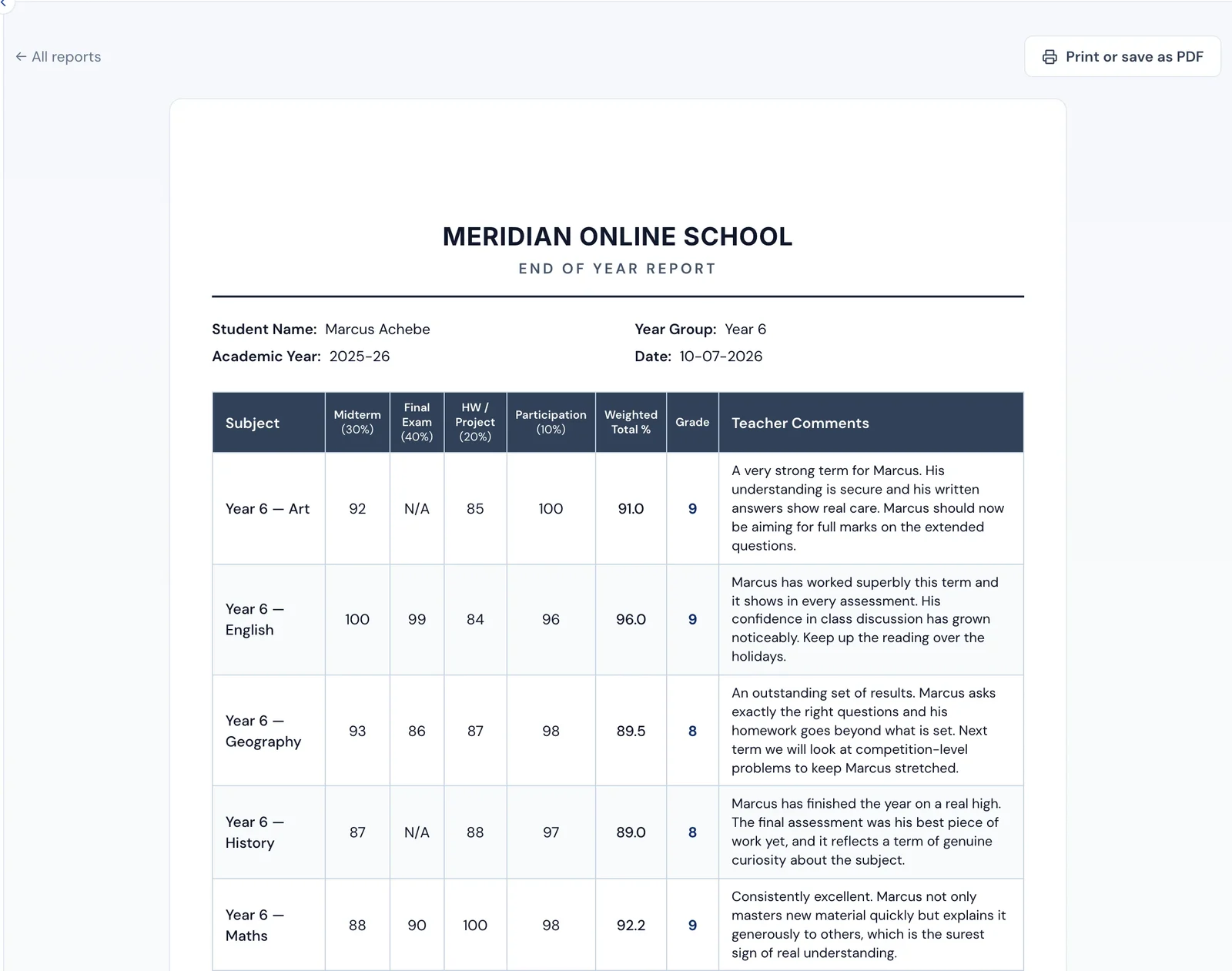
Scoring the missing component as zero is the default in a lot of software and it is almost always wrong: it punishes a child for a lesson the school cancelled or a term they were not yet enrolled for. Drop the component and renormalise the remaining weights. A pupil marked on three of four components is marked out of those three, and the report should say so.
What is the grade actually derived from? Write the weightings on the report itself. A parent who can see that the final exam is 40% and homework 20% can have a sensible conversation about it. A single letter with no derivation invites the question you least want, which is whether the grade means anything.
Who can still change a mark, and when? Reports need a state — draft while teachers are entering marks, open for review, locked before publication, then published. Without locking you will publish a report that a teacher edits an hour later, and the version the parent saved as a PDF no longer matches your records.
Write comments a parent can act on
The standard failure is a report full of sentences that are true of any child: works hard, should continue to revise.
A comment earns its place if it contains something only this child's teacher could have written and something the family can do. "Marcus asks exactly the right questions and his homework goes beyond what is set; next term we will look at competition-level problems" tells a parent their child is known.
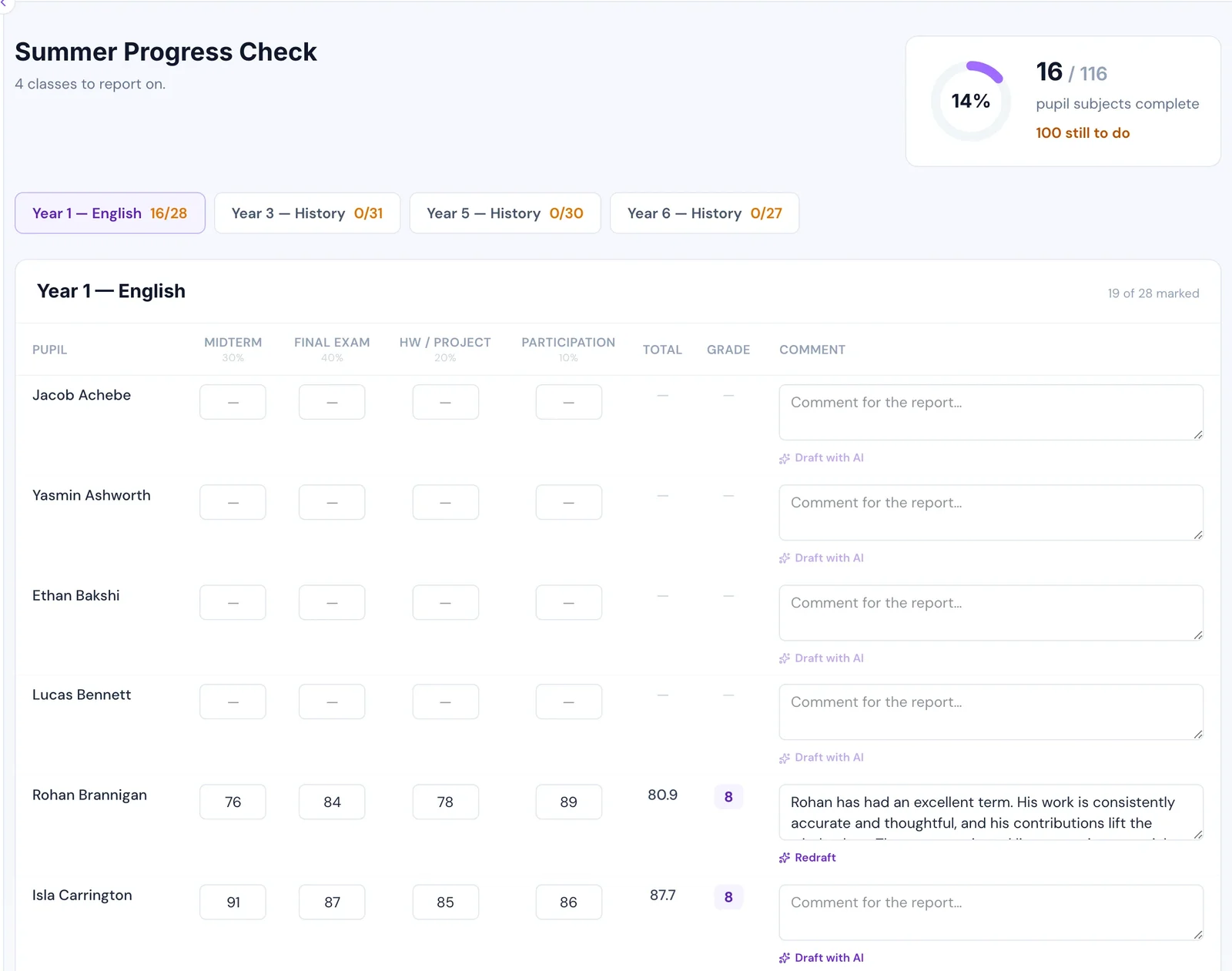
If you use AI to draft comments — and it is genuinely useful for the first pass across a hundred pupils — the rule is that a teacher edits every one before it goes out, and that the draft is built from that child's actual marks and attendance rather than invented. A comment nobody checked will eventually describe a child who does not exist, and it only has to happen once.
Cadence
Termly report cards, continuous attendance and homework, one parents' evening a term, and a call whenever something matters. That is enough for most schools, and it is more than most manage.
Two additions that are cheap and disproportionately effective:
One positive contact per child per term that is not a report. Two lines from a teacher about something specific. It is the single highest-return thing on this list, and it is what stops the school's only messages being about money.
Tell parents when a teacher has replied to their child's work. Feedback that a pupil never sees might as well not have been written.
The language question
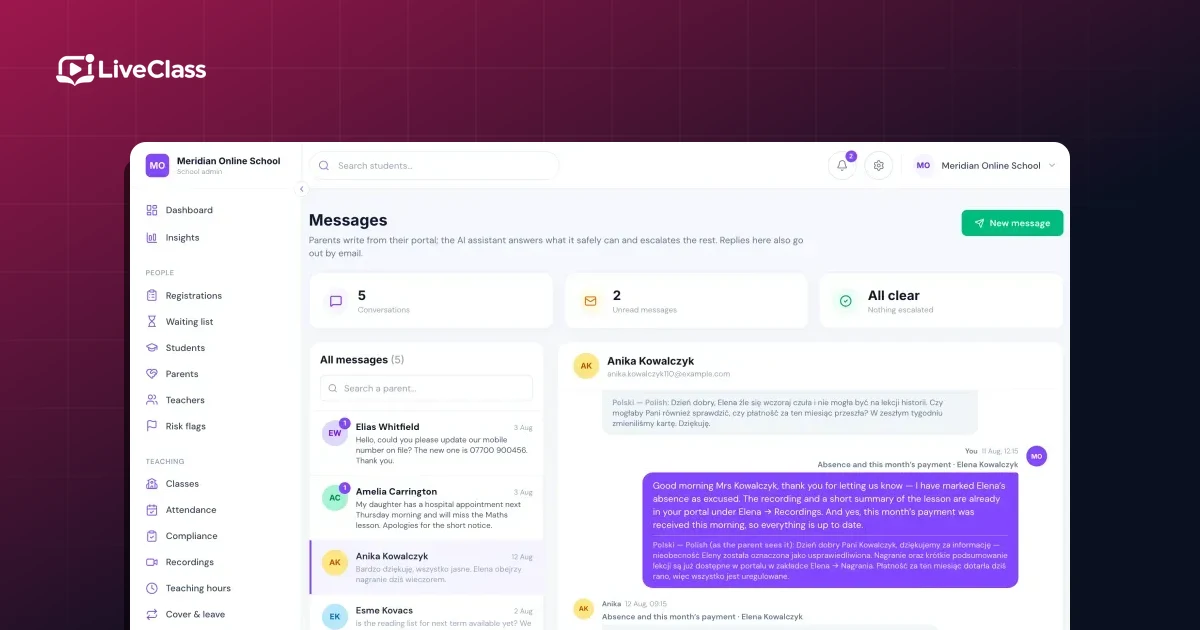
An online school's families are frequently not all English-speaking, and a report card is exactly the document where that matters most. Sending it in a language a parent cannot read while assuming they will manage is not neutral — it excludes them from their own child's education. That is its own article.
Where this sits
Reporting is the layer that proves the rest happened. It sits on top of attendance and homework data, so if the register is wrong the reports are wrong too, only now they are wrong in a document a parent keeps.