Most schools treat "Year 7 is full" as the end of a conversation. It is close to the opposite: the family in front of you has already read your site, compared you to alternatives, and decided they want you. They are the most qualified prospect you will ever speak to, and turning them away with nothing is throwing that away for no reason.
A waiting list is how you keep it. It converts far better than cold enquiries because the choosing has already happened.
Say the number
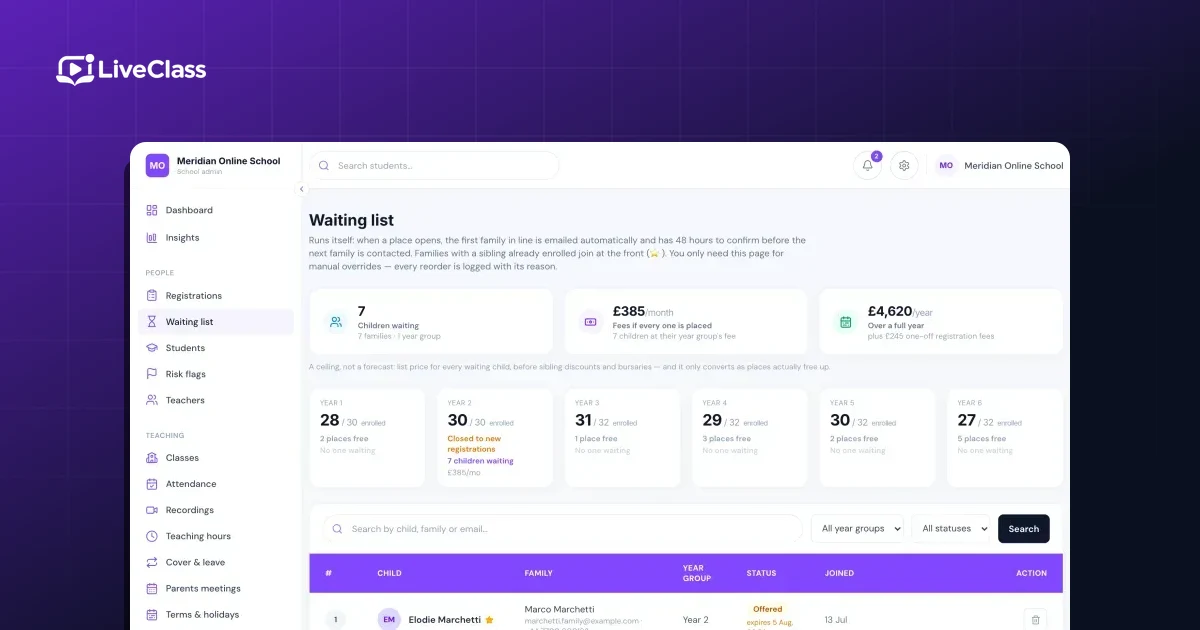
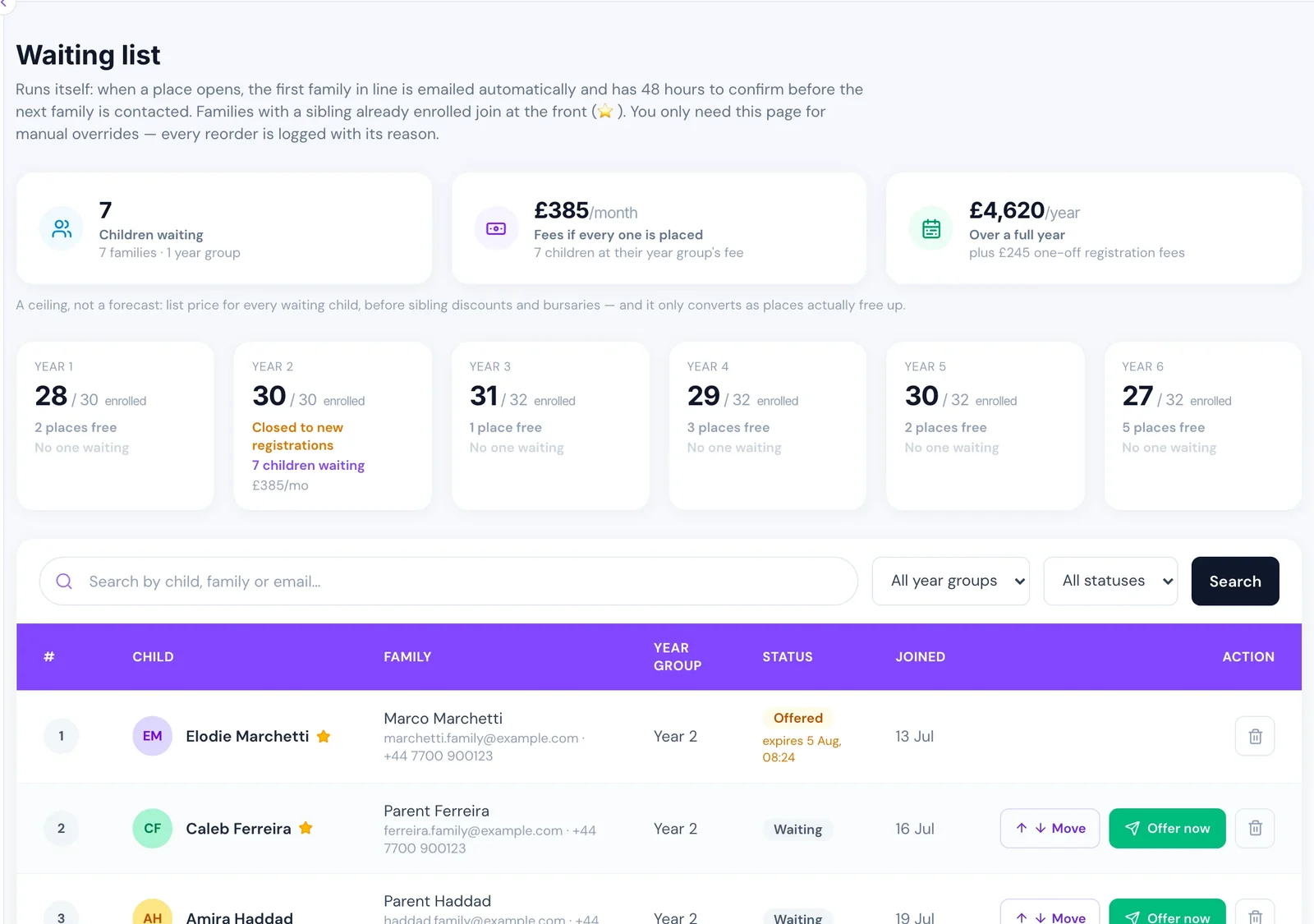
The single thing that makes a waiting list credible is telling the family where they are on it. "We will let you know" is what schools say when nothing is written down, and parents can tell.
"You are fourth for Year 7, and we usually see two or three places open at the end of each term" is a completely different conversation. It is honest about the odds, it lets the family plan, and it makes the school sound like it is running something rather than fielding calls.
If you cannot say the number, you do not have a waiting list — you have a pile of emails.
Places come free at predictable moments
Online schools lose pupils at term boundaries, when families move, and when a child's circumstances change. That is unwelcome but it is rhythmic, which means the waiting list should be worked on a rhythm too.
Before each term starts, and again a fortnight in, go through the list top down. Two things happen: you fill places you did not know you had, and you find out which families have gone elsewhere — which is information, not failure.
A list nobody works decays into a list nobody believes. Six months of silence and the family has enrolled somewhere else and remembers you as the school that never got back to them.
Offers need an expiry
An open-ended offer blocks a place indefinitely while the family thinks. Give it a deadline — a week is usually right — and say what happens after it: the place goes to the next family, and they keep their position on the list.
That last clause matters. Without it, declining an offer feels like being struck off, so families stall rather than say no, and stalling is worse for everyone than a clean decline.
Ask the question that lets you fill a different gap
Somewhere on the waiting list form, ask what the family actually needs.
You will find that a meaningful share of people waiting for one thing would happily take another: a different subject combination, a different start date, a sibling place, or the same year group in a class at a different time. Year 7 being full does not mean you cannot enrol that child at all — it means you cannot enrol them into that one slot.
Schools that never ask leave those enrolments on the table permanently.
What a closed year group should still do
If a year group is genuinely closed — no realistic prospect of a place this year — the public page should say so plainly and still take the name. "Full for 2026–27, join the list for 2027–28" is not a fudge, it is the accurate statement, and it converts a dead page into next year's intake.
The alternative, quietly removing the year group from the site, means those families never enter your pipeline at all and you start next year's admissions from cold.
The uncomfortable part
A waiting list creates an obligation. If you take a family's details and say you will be in touch, you have to be in touch — including to say nothing has changed. A school that goes silent on people who explicitly asked to be told is worse off than one that never offered.
So keep it small enough to work honestly. A list of twelve you actually contact each term is worth far more than a list of two hundred you never open, and it is the one that produces enrolments in September.
The rest of the admissions pipeline — the states, the form, the offer and the first week — is in online school admissions, from enquiry to first lesson.